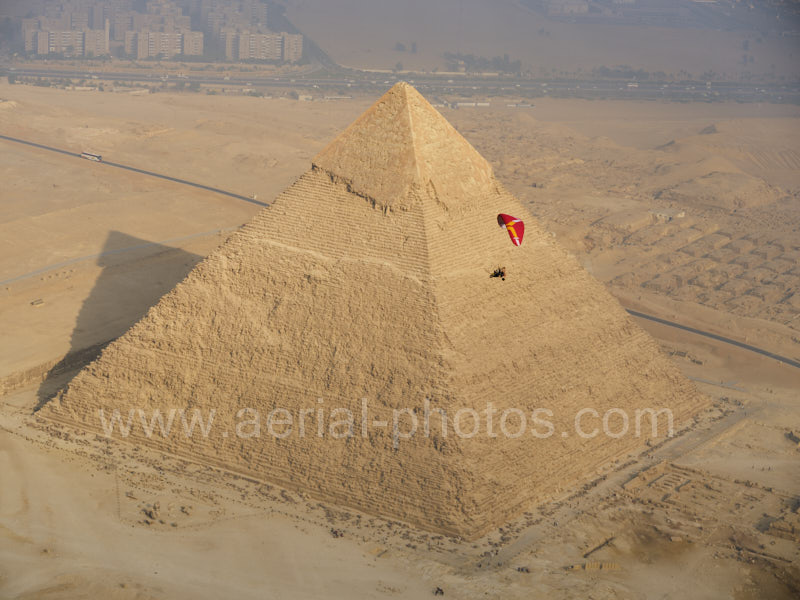
Sightseeing flight around the pyramid of Khafre. A traditional way to discover the pyramids is riding on a camel’s back. Recently, a new option has been available with the paramotor. On a tandem paramotor, the passenger seats in the front giving her / him an unobstructed view of the pyramids. Flying in a paramotor is a much more sensorial experience than flying in the enclosed cockpit of a helicopter or an airplane. Giza, Egypt.
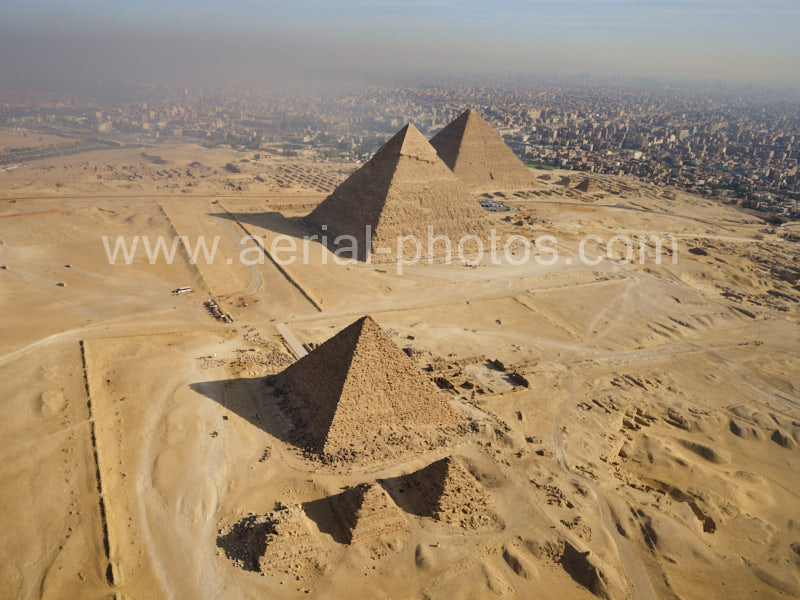
The Giza pyramid complex with, left to right, the Queens' 3 pyramids, pyramid of Menkaure (61-meter-tall), pyramid of Khafre (136-meter-tall) and pyramid of Khufu (138-meter-tall).
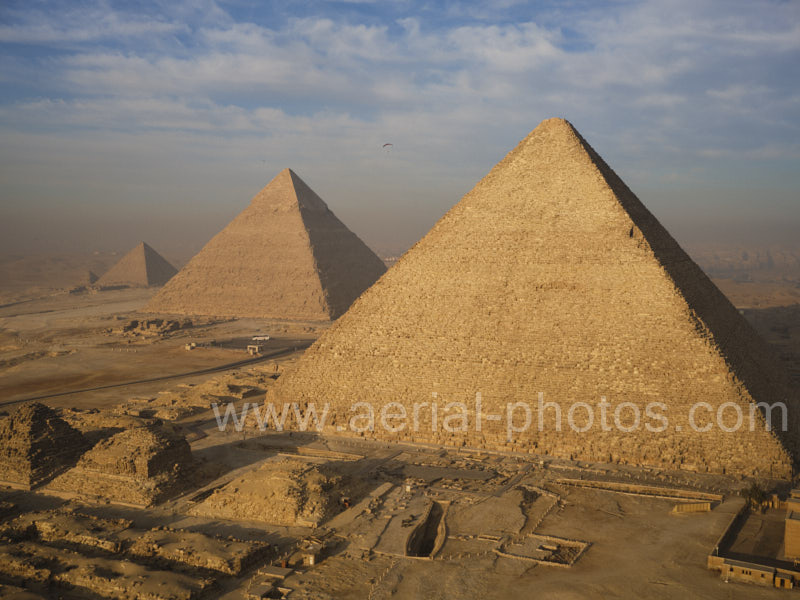
The Giza pyramid complex with, left to right, pyramid of Menkaure, pyramid of Khafre and pyramid of Khufu. Giza, Egypt.
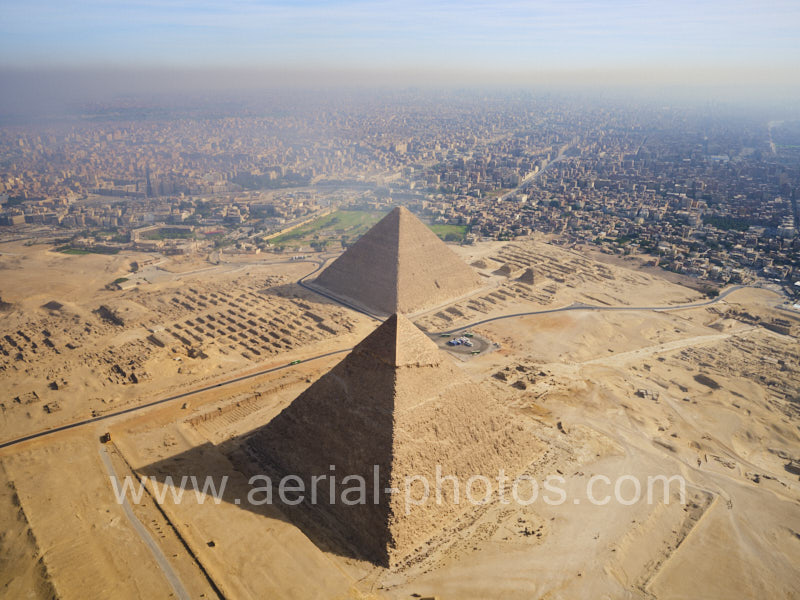
Perfect geometry of the pyramids of Khafre (closest) and Khufu. The pyramids are oriented towards the cardinal points. Photo taken with the camera pointed toward the northeast (45°).
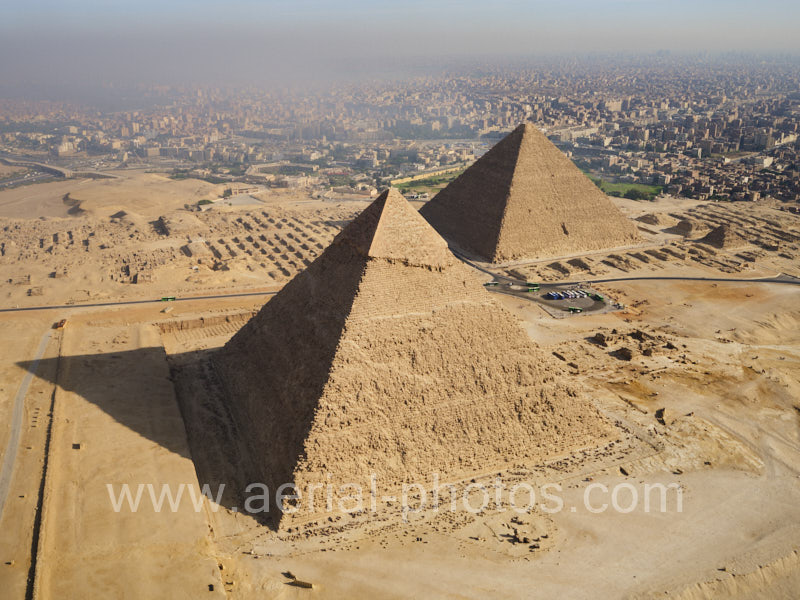
The pyramids of Khafre (closest) and Khufu on the Giza plateau overlooking the megalopolis of the greater Cairo. Although the pyramid of Khufu is 2 meters taller than the pyramid of Khafre, it may appear slightly smaller as it’s base is 10 meters lower. Between the two pyramids lies a parking for tour buses. On average, a tour bus is about 13 meters long, it gives a sense of scale to the sheer size of the pyramids.
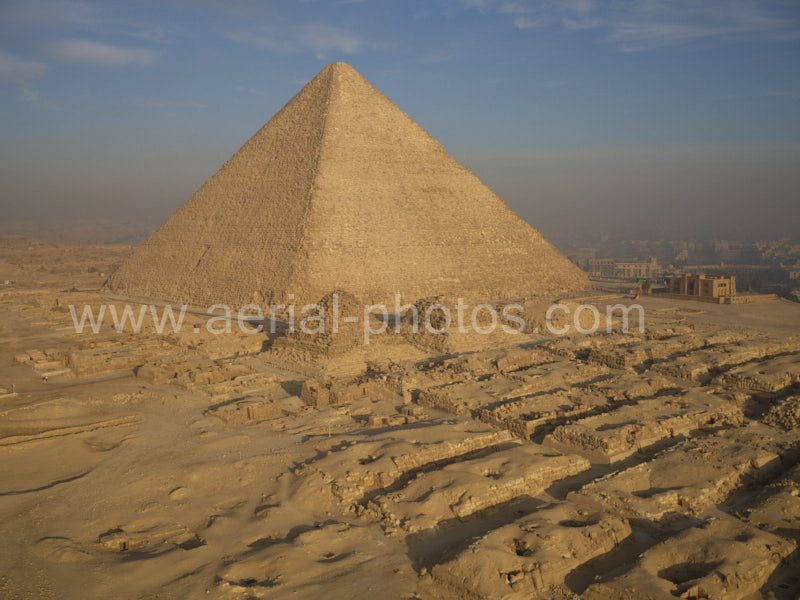
The pyramid of Khufu, also known as the Great Pyramid of Giza, is the largest and the tallest of the Egyptian pyramids. It is 138.5-meter-tall and was for over 3700 years, the tallest man-made structure in the world. Each of the four sides of the base is 230 meters in length. The pyramid is flanked by the eastern cemetery. These very ancient tombs are called Mastabas.
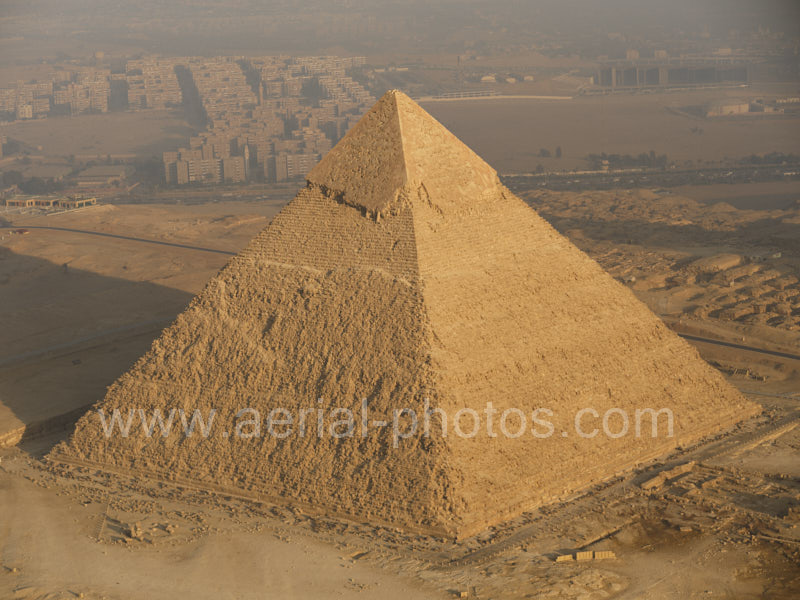
The pyramid of Khafre (or Chephren) is the second tallest of the Egyptian pyramids with a height of 136.4 meters. Each of the four sides of the base is 215.5 meters in length. The slope of the pyramid has a 53° 08' angle, which is steeper than the pyramid of Khufu (51° 50' 24"). It was built for pharaoh Khafre who was the son of pharaoh Khufu.
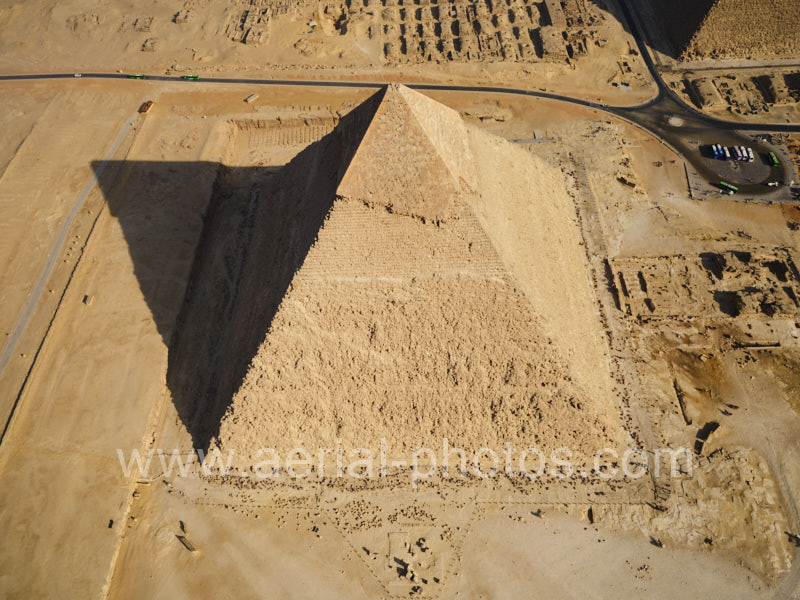
The pyramid of Khafre. Giza, Egypt.
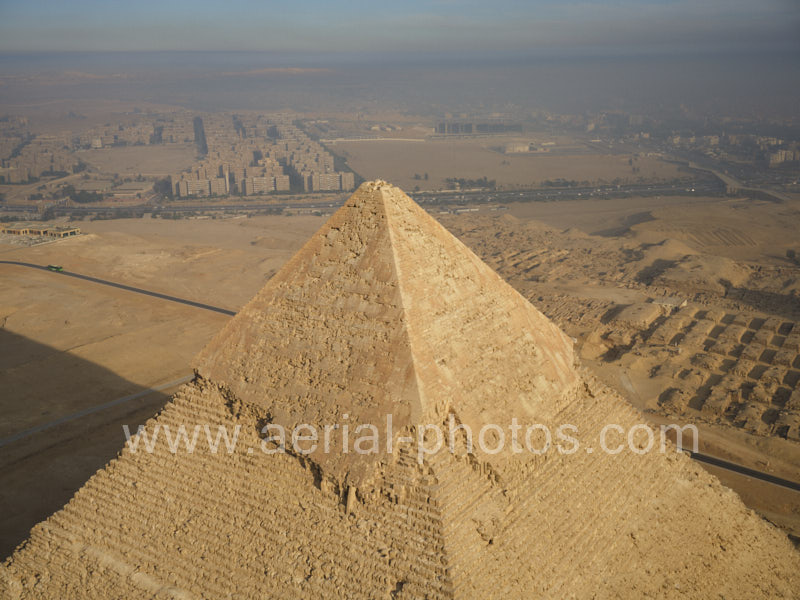
The pyramid of Khafre is the only one of the three giant pyramids that still has cladding at the top. The pyramidion (capstone of an Egyptian pyramid or the upper section of an obelisk) is missing. It original height was 146.6 meters (currently 138.5 meters).
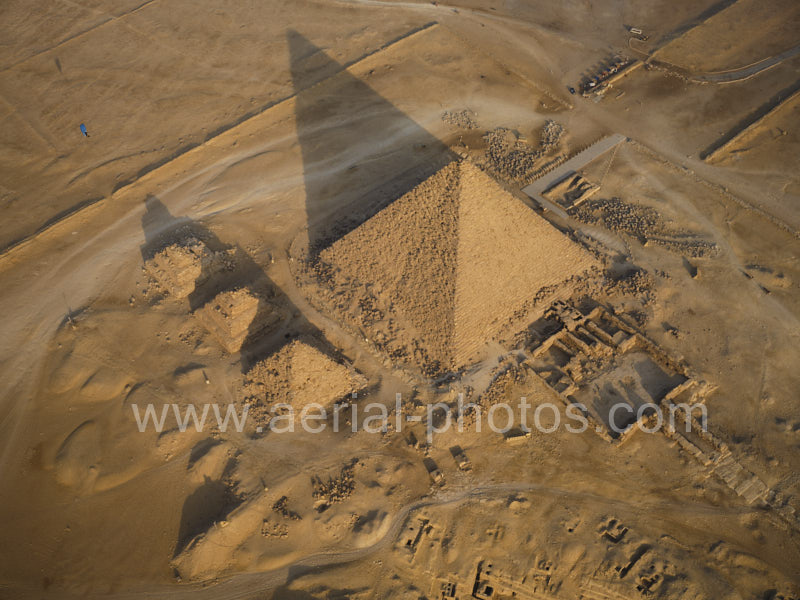
The pyramid of Menkaure and the Queens' 3 pyramids. The pyramid was built to serve as the tomb of pharaoh Menkaure (the son of Khafre and grandson of Khufu). It is the smallest of the 3 pyramids but still has a respectable height of 61 meters.
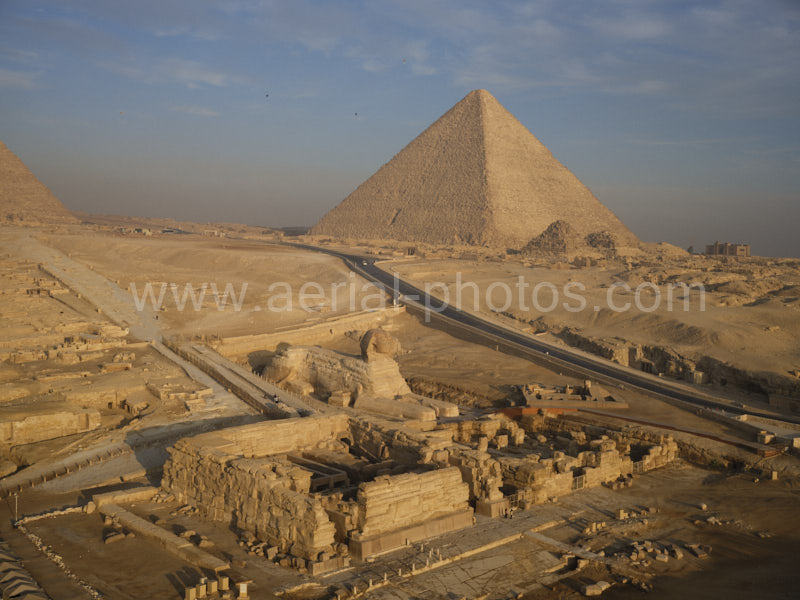
The Great Sphinx of Giza with the pyramid of Khufu. They both are part of the Memphite Necropolis and are a UNESCO World Heritage Site.
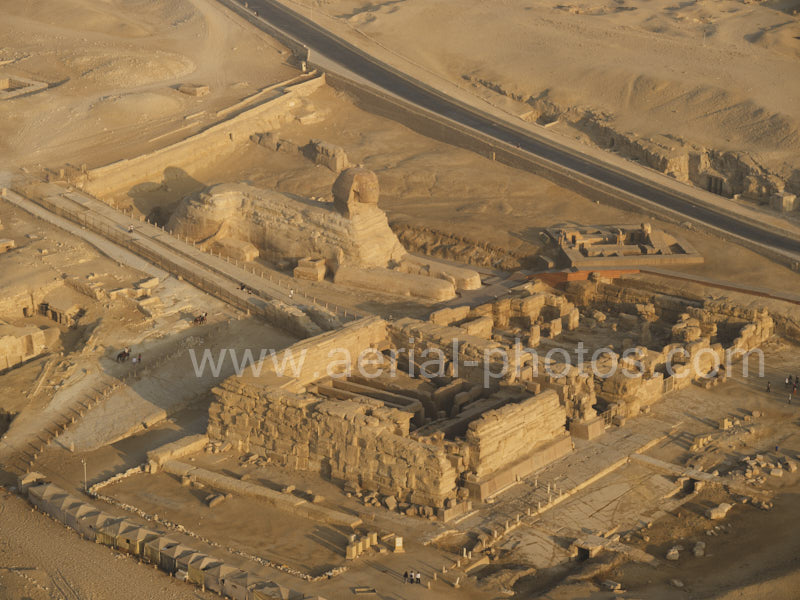
The Great Sphinx of Giza with the Sphinx temple in front of it and the Valley Temple of Khafre (adjacent to the Sphinx Temple). The stones cut from around the Sphinx's body were used to construct the Sphinx Temple. According to archaeological analysis, the Valley Temple of Khafre was finished before work was begun on the Great Sphinx and its temple.
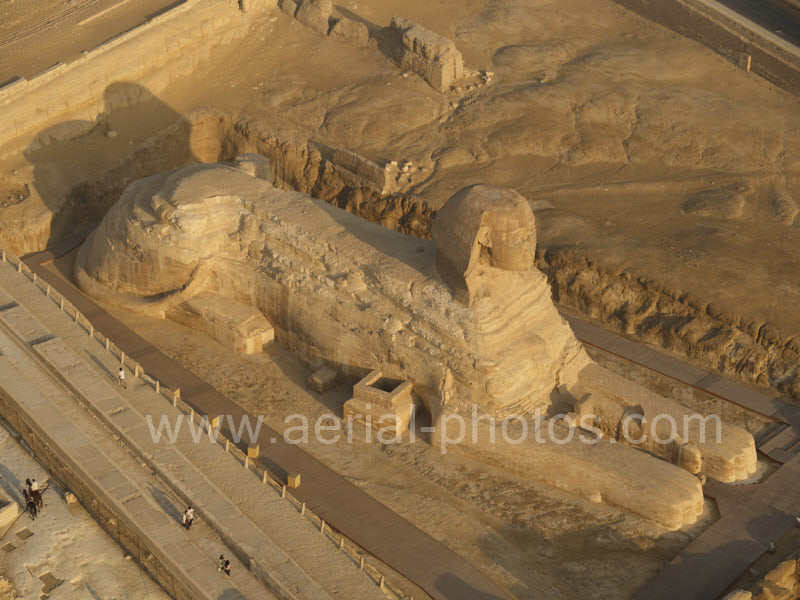
The Great Sphinx of Giza is a limestone statue carved from the bedrock. A sphinx is a mythical creature with the body of a lion and the head of a human. Most Egyptologists believe that the face of the Great Sphinx of Giza represents the pharaoh Khafre. This monumental sculpture measures 73 meters in length and 20 meters in height.
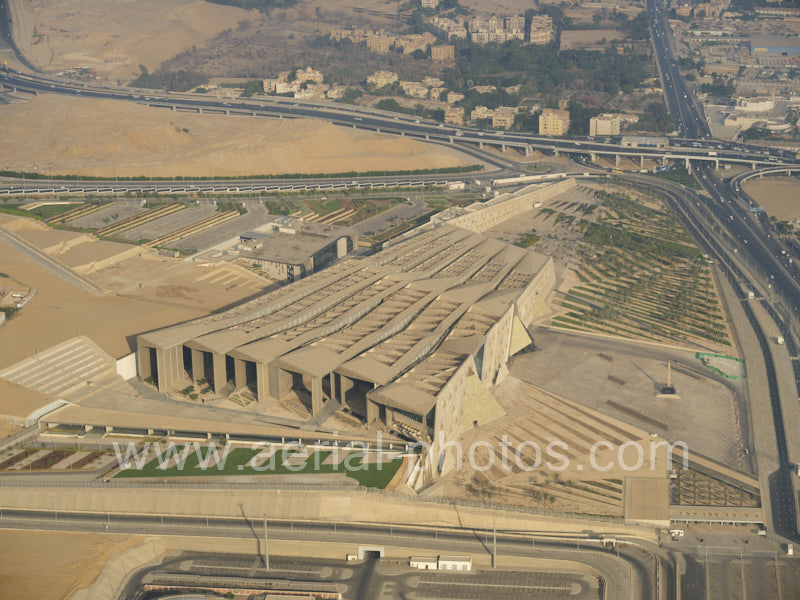
The Grand Egyptian Museum (GEM) is a national archaeological museum dedicated to ancient Egyptian civilization. Construction started in 2005 but due to numerous setbacks it was officially opened only on November 1st 2025. By comparison, the pyramid of Khufu was built over a period of about 26 years. The museum is located 2 kilometers away from the pyramids of Giza.
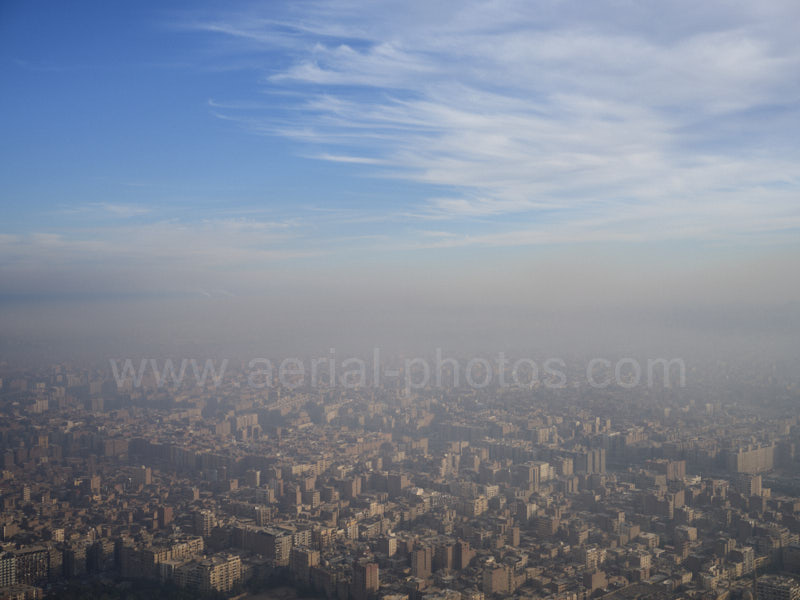
Thick layer of smog over Giza. The Greater Cairo which includes Giza is, according to the United Nations, the 6th largest metropolitan area in the world with a population estimated at 25 millions in 2025.
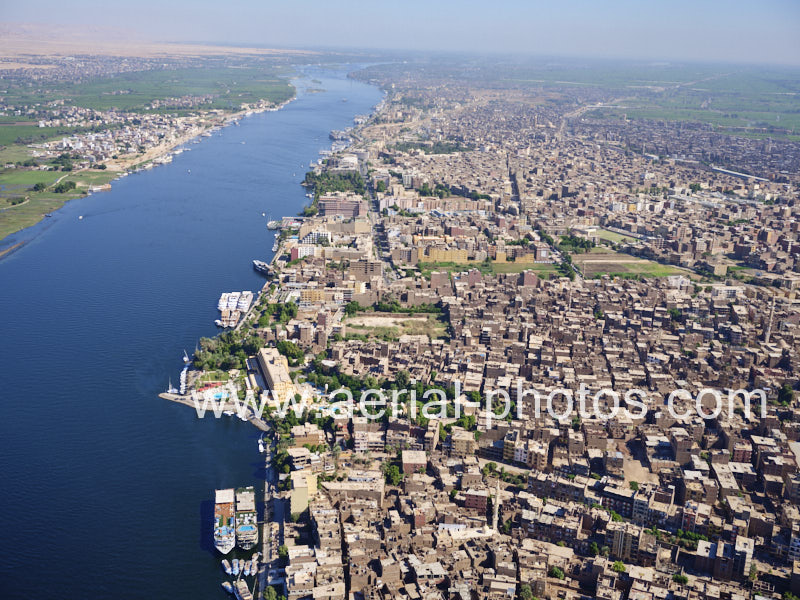
City of Luxor on the East Bank of the Nile River. The city is a major tourist destination as the famed temples of Luxor and Karnak are within the city limits and on the West Bank lie many other temples and the Valley of the Kings. The Nile River, the longest river on earth crossing the largest desert on earth, has been the lifeblood for Egyptians for over 4500 years.
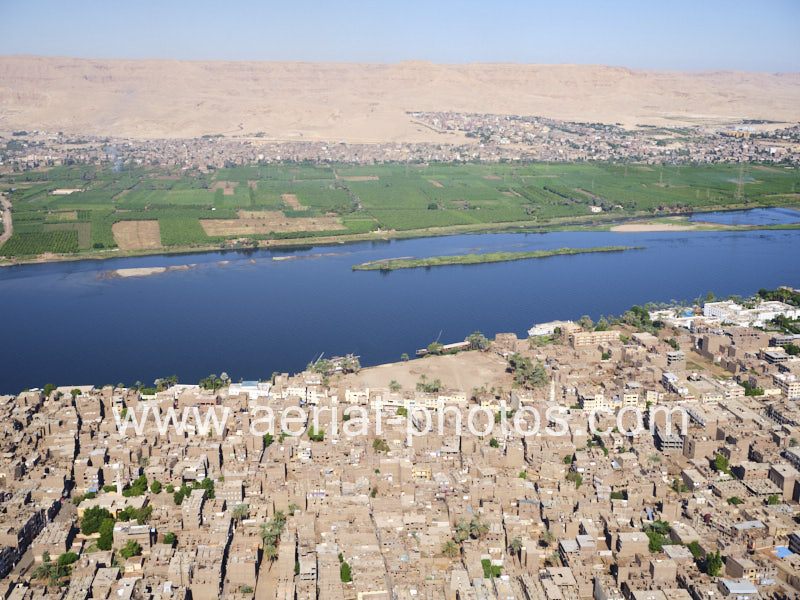
City of Luxor on the East Bank of the Nile River and across the river, sugarcane plantations and the Sahara Desert in the distance. The navigable Nile forms an 1,100-kilometer-long artery, stretching from the First Cataract, near Aswan, all the way to Alexandria on the shores of the Mediterranean. The current carries boats north and the prevailing winds from the north carry the sailing boats south.
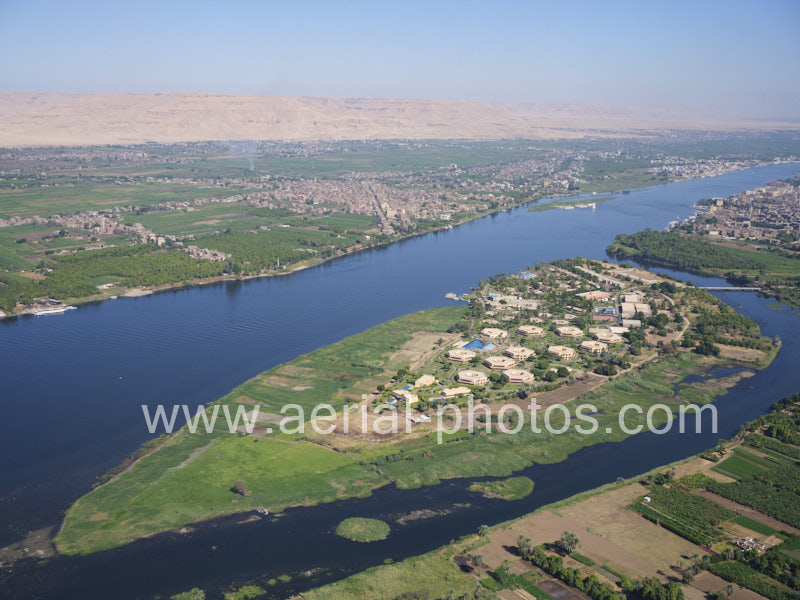
Jolie Ville Resort on Crocodile Island in Luxor, Egypt.
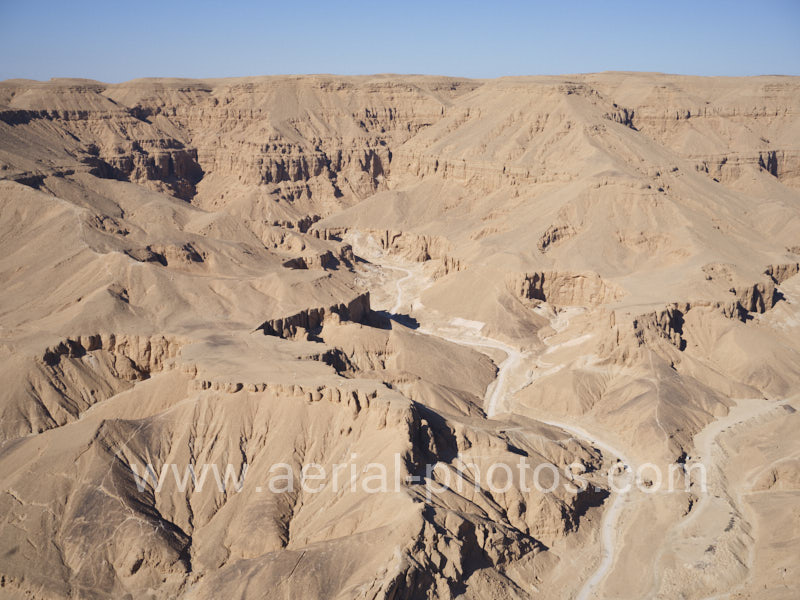
Western Valley (aka Valley of the Monkeys) is adjacent to the famed Valley of the Kings. The climate in Luxor is brutal. The yearly precipitation is only a few millimeters, and rainfall does not occur every year. It is one of the sunniest city on earth and every summer, the temperature regularly soars above 40C.