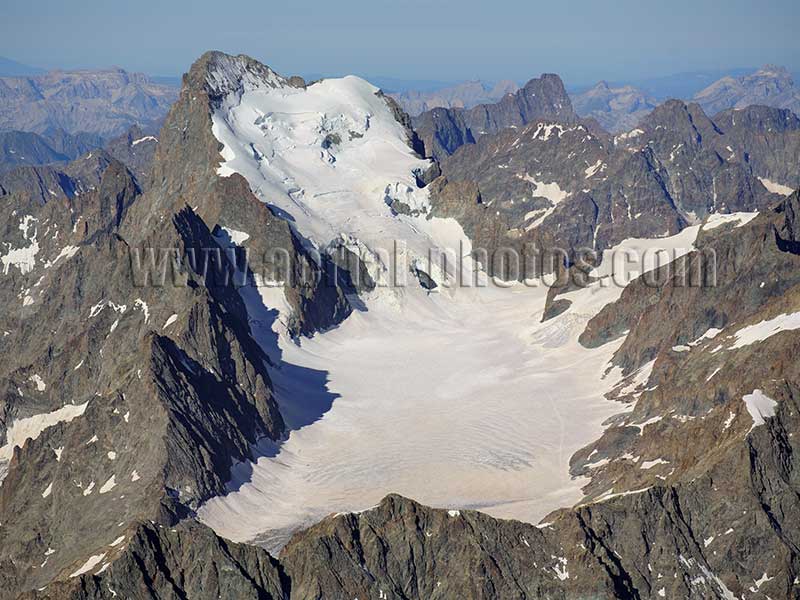
With an elevation of 4102 meters, the Barre des Écrins is the highest summit in the Provence-Alpes-Côte d'Azur region. With a length of about 5km, Glacier Blanc is the largest glacier in the region. This region offers an incredible variety of landscapes; as the crow flies, Barre des Écrins is only 155km from Nice Airport on the French Riviera. Vallouise-Pelvoux, Hautes-Alpes, Provence-Alpes-Côte d'Azur, France.
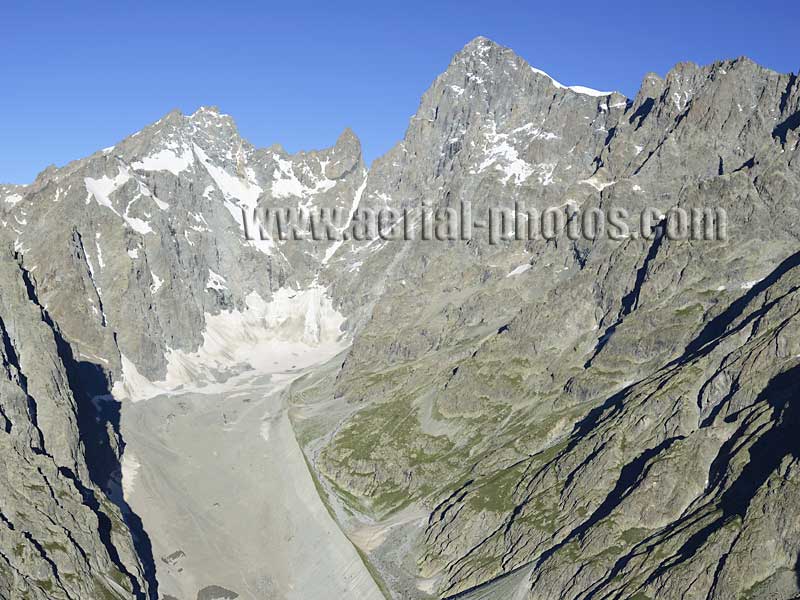
The southeastern face of Barre des Écrins is rockier, it overlooks Glacier Noir. It is the Alps’ most southerly peak above 4000 meters. Before the annexation of Savoy in 1860, it was the highest mountain in France. The Englishmen Adolphus W. Moore, Horace Walker and Edward Whymper, guided by the Chamonix native Michel Croz and the Swiss Christian Almer, made the first ascent of Barre des Écrins in 1864. Vallouise-Pelvoux, Hautes-Alpes, Provence-Alpes-Côte d'Azur, France.
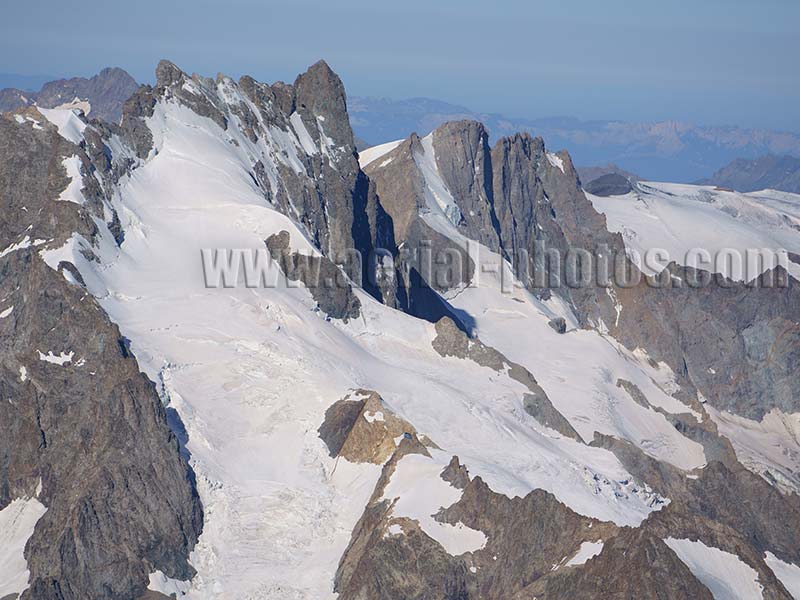
La Meije is the second highest summit in the Écrins Massif with an elevation is 3984 meters. The summit’s north face, seen here from the east, offers an awe-inspiring vertical drop of 2.5 km above the Romanche River only 4.3 kilometers away. Le Grand Pic de la Meije is a very difficult summit to reach, and was the last major peak of the Alps to be climbed in 1877. La Grave, Hautes-Alpes, Provence-Alpes-Côte d'Azur, France.
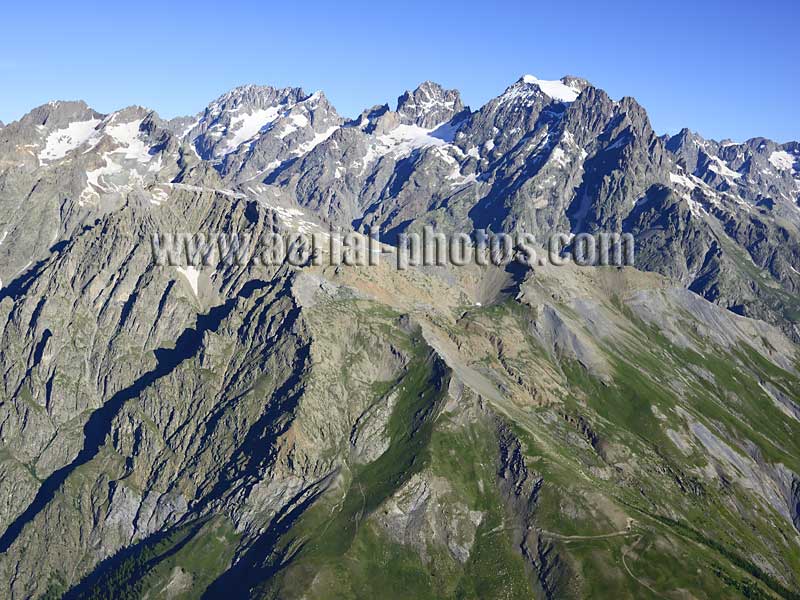
Left to right: Ailefroide (3953m), Pic Sans Nom (3913m) and Mount Pelvoux (3914m). These 3 majetic peaks are in the Écrins Massif and within the Écrins National Park. The park was created in 1973 and covers a surface area of 930km2. Vallouise-Pelvoux, Hautes-Alpes, Provence-Alpes-Côte d'Azur, France.
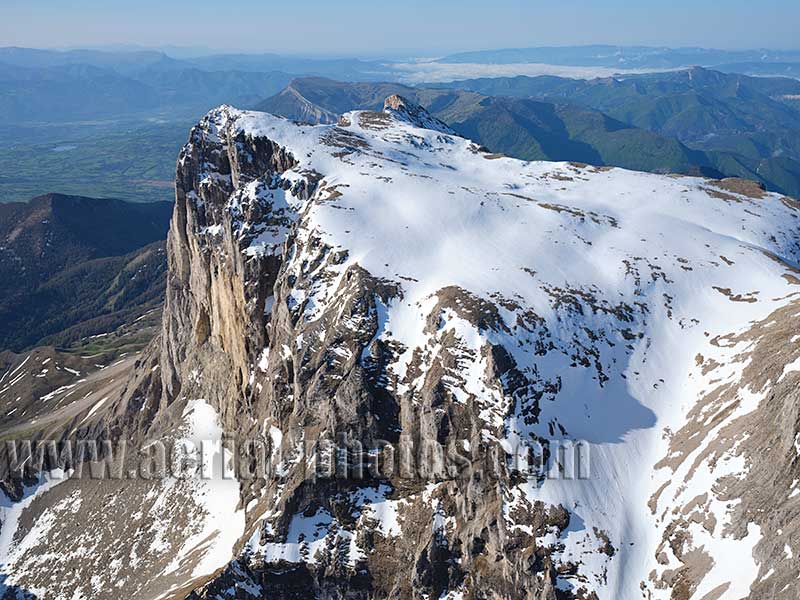
Pic de Bure viewed from above and from the north. It is located in the southern Dévoluy Massif, and is the third tallest peak with an elevation of 2709 meters. Geomorphologically, the mountain is quite remarkable with its flat top and its eastern cliff dropping a dizzying 600 meters. Hautes-Alpes, Provence-Alpes-Côte d'Azur, France.
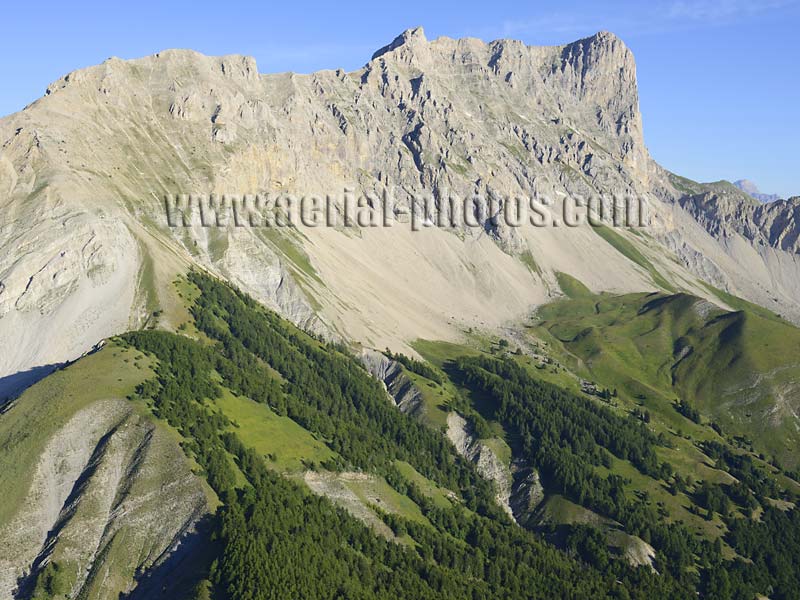
Eastern face of Pic de Bure viewed from the south. This massive limestone cliff was first ascended in 1961 by René Desmaison, André Bertrand and Yves Pollet-Villard, it took them 3 days to achieve this feat considered one of the most difficult climb in the French Alps. Hautes-Alpes, Provence-Alpes-Côte d'Azur, France.
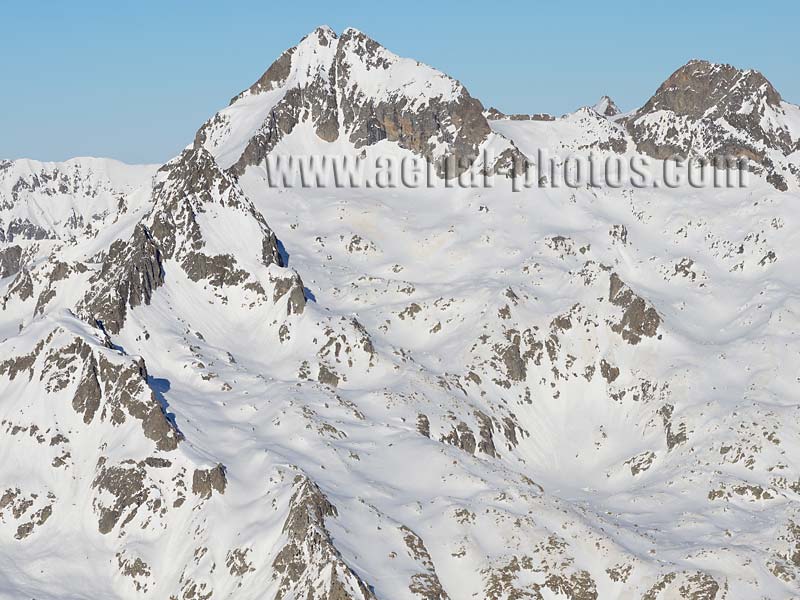
Located in the Mercantour National Park, the Cime du Gélas (elevation: 3143m) is the Alpes Maritimes’ highest peak. Viewed here from the south, the other side is in the Piedmont region of Italy. Saint-Martin-Vésubie, Alpes-Maritimes, Provence-Alpes-Côte d'Azur, France.
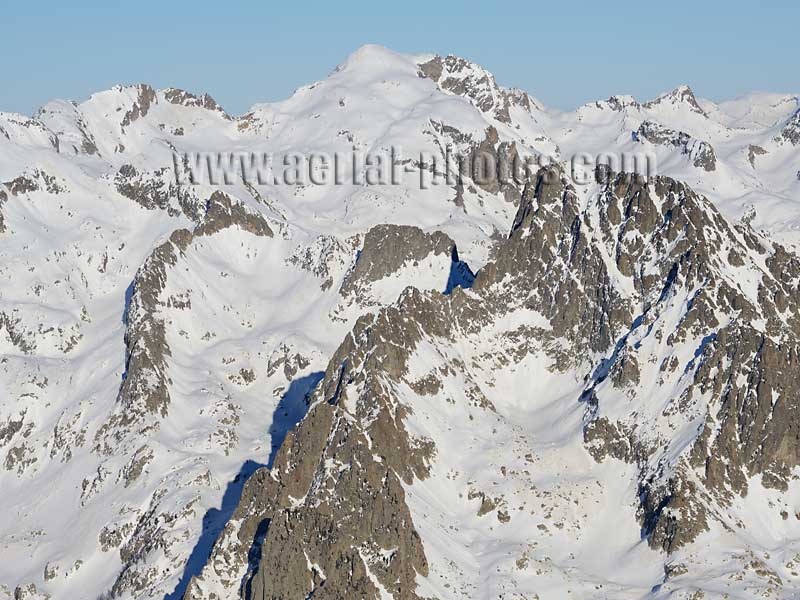
Mont Clapier (elevation: 3045m) is Alps' above-3000m-summit closest to the Mediterranean Sea (at 38km only). Viewed here from the southwest, behind the summit, on the Italian side, the Mont Clapier Glacier is the southernmost glacier in the Alps. Saint-Martin-Vésubie, Alpes-Maritimes, Provence-Alpes-Côte d'Azur, France.
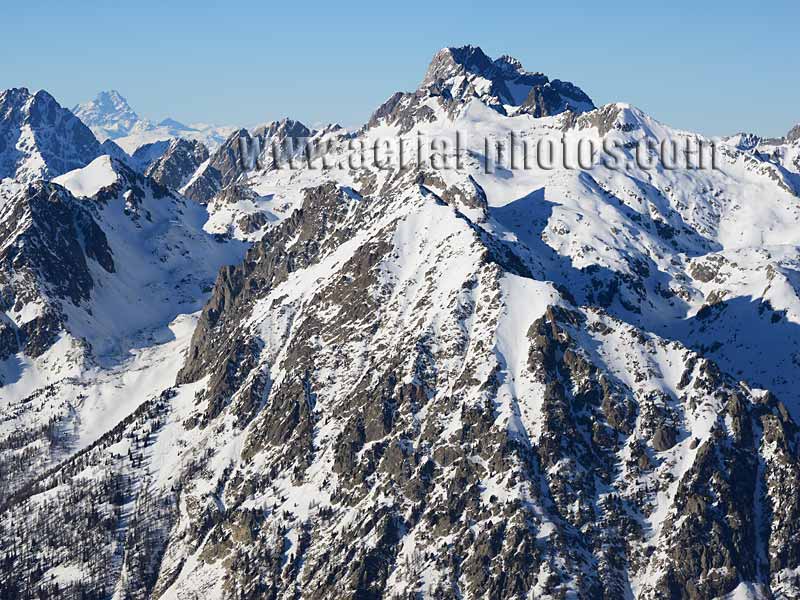
Monte Argentera (elevation: 3297m) is the highest summit in the Maritime Alps. The summit which is entirely in Italy is seen here from the French side south of Cime du Mercantour. In the distance, on the left, Monviso (3841m) can be seen. Saint-Martin-Vésubie, Alpes-Maritimes, Provence-Alpes-Côte d'Azur, France.
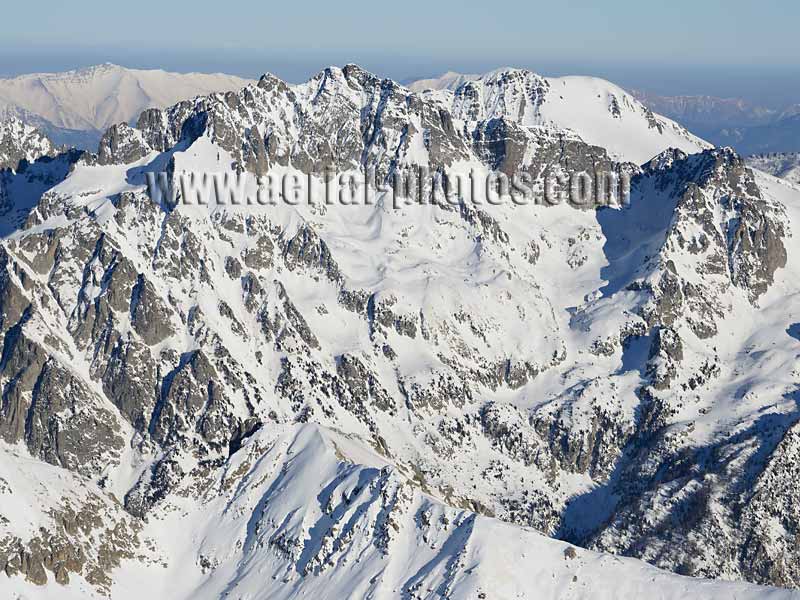
The Mont Grand Capelet is a 2938-meter-high summit, high above the Gordolasque Valley in the Mercantour National Park, seen here from the west. Belvédère, Alpes-Maritimes, Provence-Alpes-Côte d'Azur, France.
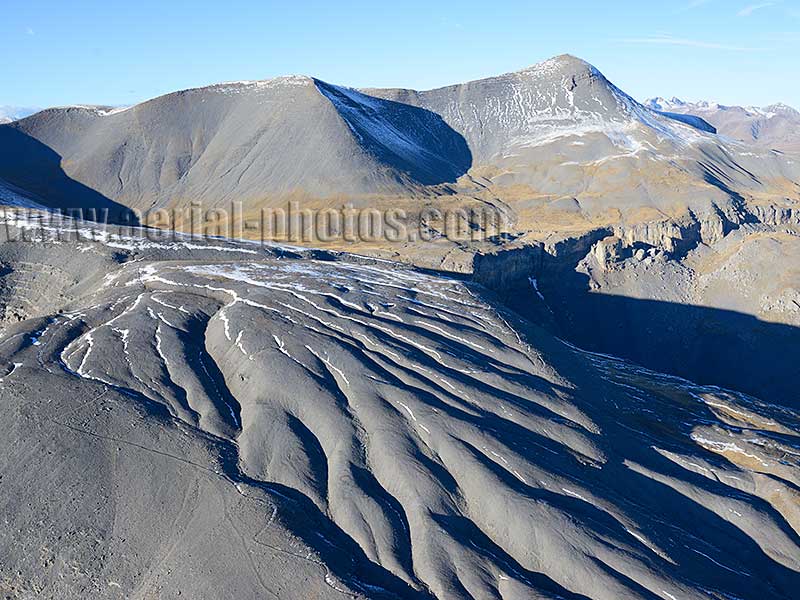
Mount Mounier is one of the iconic peaks of the Mercantour National Park. The southern slopes below its 2817-meter-high summit offer a moonscape of black marl. The mountain is the headwaters of the Cians River, which has carved the Cians Gorge, noted to its dark red pelites. Beuil, Alpes-Maritimes, Provence-Alpes-Côte d'Azur, France.
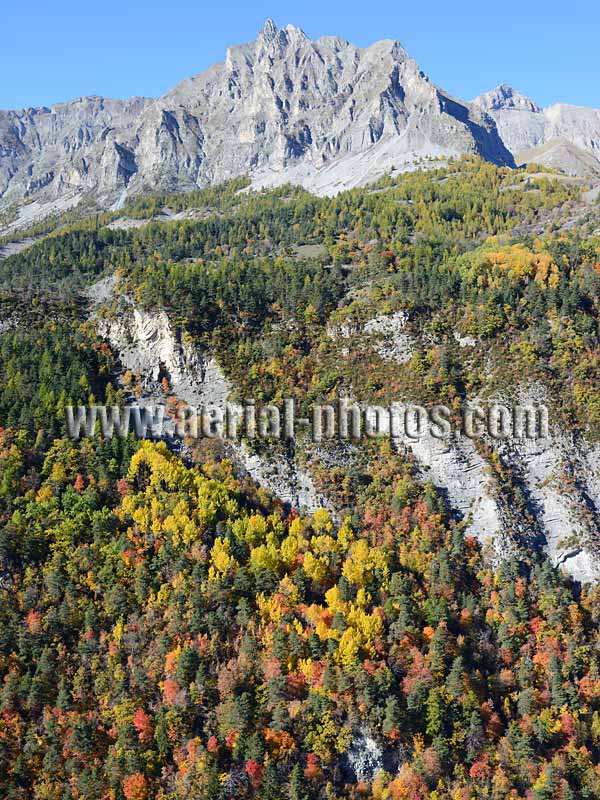
Pelens Needles (elevation: 2523m). Saint-Martin-d’Entraunes, Alpes-Maritimes, Provence-Alpes-Côte d'Azur, France.
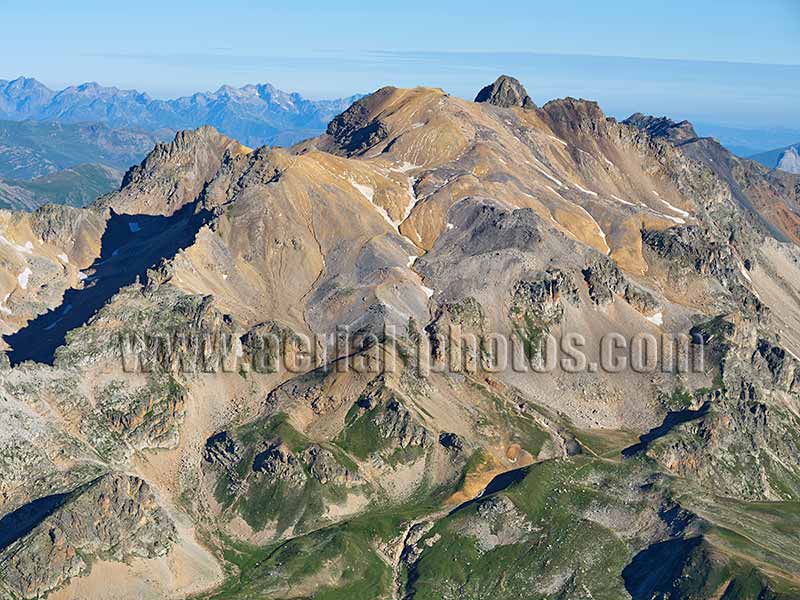
Mont Thabor (3178m, middle) and Pic du Thabor (3207m, slightly behind Mont Thabor to the right) in the Cerces Massif. Névache, Hautes-Alpes, Provence-Alpes-Côte d'Azur, France.
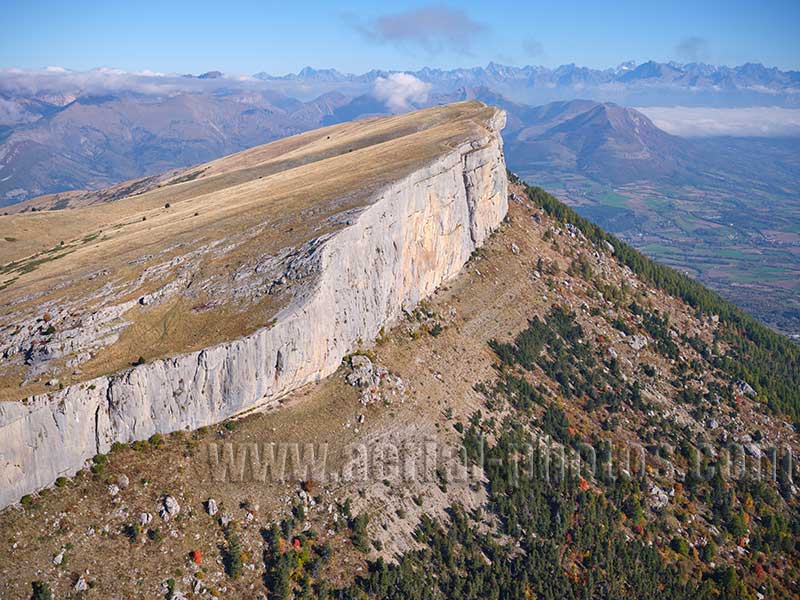
Céüse Mountain has a distinctive horseshoe shape and is fairly isolated from the other mountains, its highest elevation is 2016 meters at Pic de Céüse on its east face. In the distance, the mountain with the small glacier is Barre des Écrins (4102m). The formidable cliff of Céüse Mountain is a well-known climbing destination with 800 routes, some of which are among the most difficult in the world. Sigoyer, Hautes-Alpes, Provence-Alpes-Côte d'Azur, France.
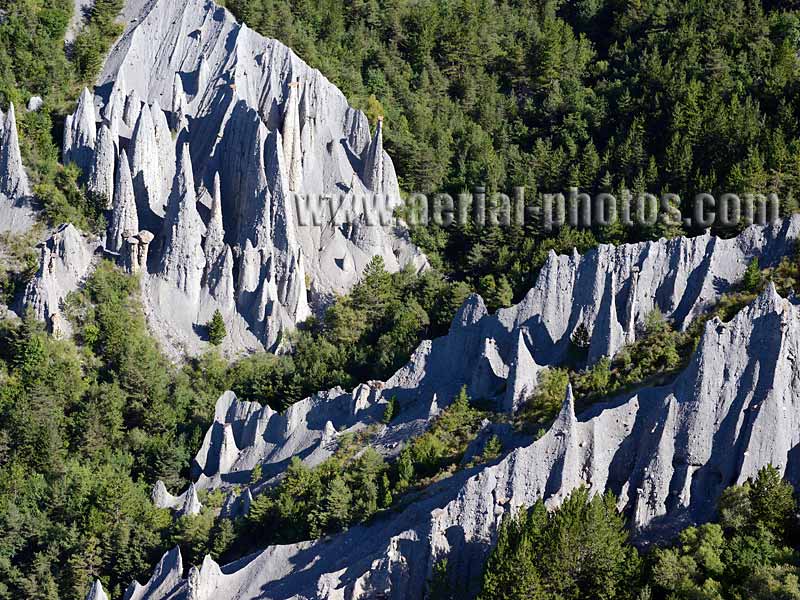
Hoodoos of Théus, these geological formations are due to the erosion of sedimentary layers of fluvio-glacial origin. Théus, Hautes-Alpes, Provence-Alpes-Côte d'Azur, France.
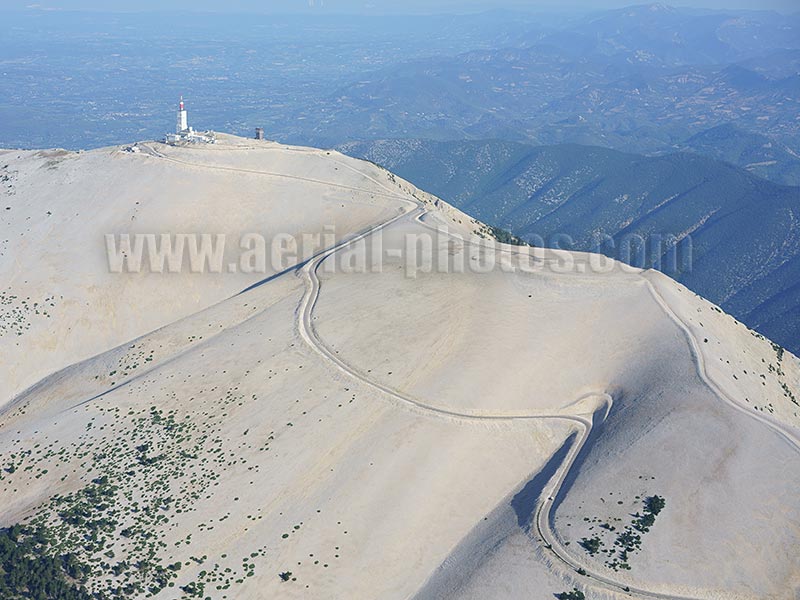
Mont Ventoux (1909m) is the highest mountain in Provence. Its trademark is its treeless limestone summit, which from a distance appears as a snowcap. In the southern Alps, trees can grow to about 2400 meters above sea level, but due to extreme weather conditions its summit is barren. Venteux in French means windy; winds reaching 320km/h have been recorded at the summit. Bédoin, Vaucluse, Provence-Alpes-Côte d'Azur, France.
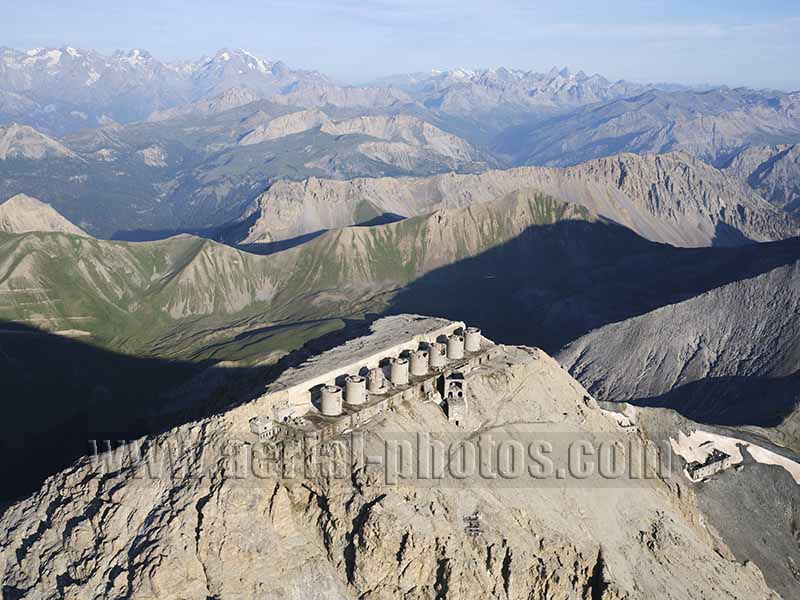
Mont Chaberton is a 3131-meter-high summit in the Cerces Massif. The artillery battery at the summit is Europe’s highest military construction. Italians built the battery in the early 1900s to strengthen their defences against France but during WWI, Italy sided with France. However in WWII, the battery was used against France. The whole mountain was annexed by France at the 1947 Paris Peace Treaties. Montgenèvre, Hautes-Alpes, Provence-Alpes-Côte d'Azur, France.
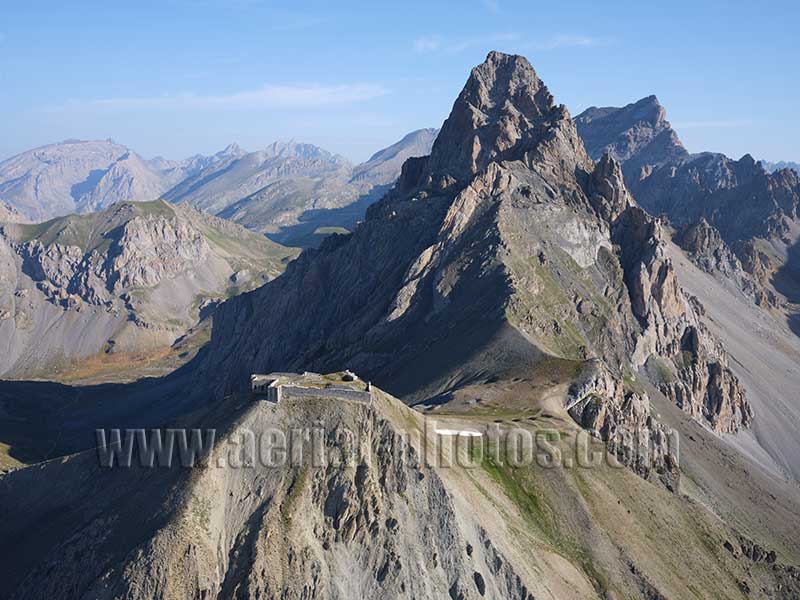
Tête de Viraysse is a 2772-meter-high peak, it is crowned with the Viraysse Battery which was built by the French Army in response to Italians fortifying the Alps after it had joined the Triple Alliance (a military alliance between Germany, Austria-Hungary, and Italy). Just behind Tête de Viraysse, La Meyna (3067m) can be seen. Val d'Oronaye, Alpes-de-Haute-Provence, Provence-Alpes-Côte d'Azur, France.
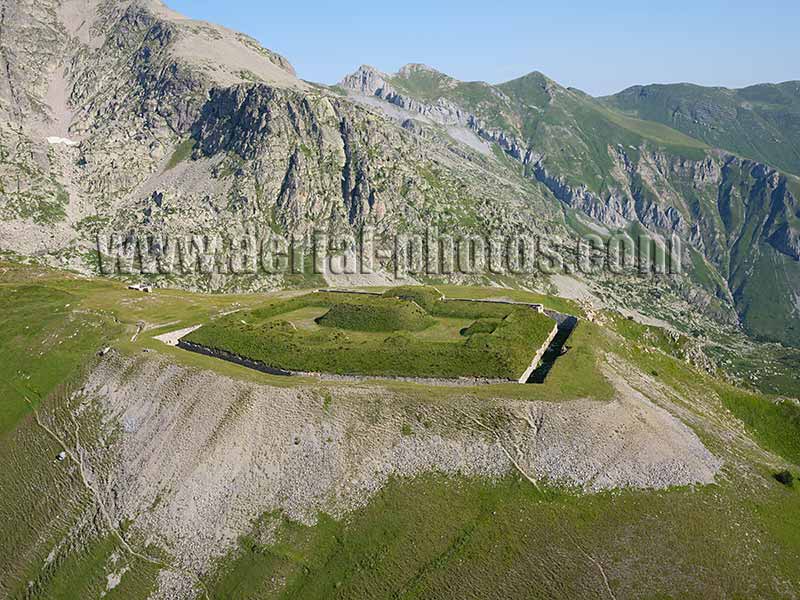
At an elevation of 2254 meters, Fort Giaure is part of a defensive system built around several forts at Col de Tende, a strategic mountain pass between France and Italy at an elevation of 1870 meters. It was built by the Italian Army in the late 1800s to prevent any advances by French troops from the Roya Valley. Tende, Alpes-Maritimes, Provence-Alpes-Côte d'Azur, France.